 Epile-X by NeuraVance Labs
Continuous brain monitoring meets everyday life.
A discreet behind-the-ear wearable and app, shaped with the epilepsy community. What makes it different is what it measures: the brain itself, together with the body.
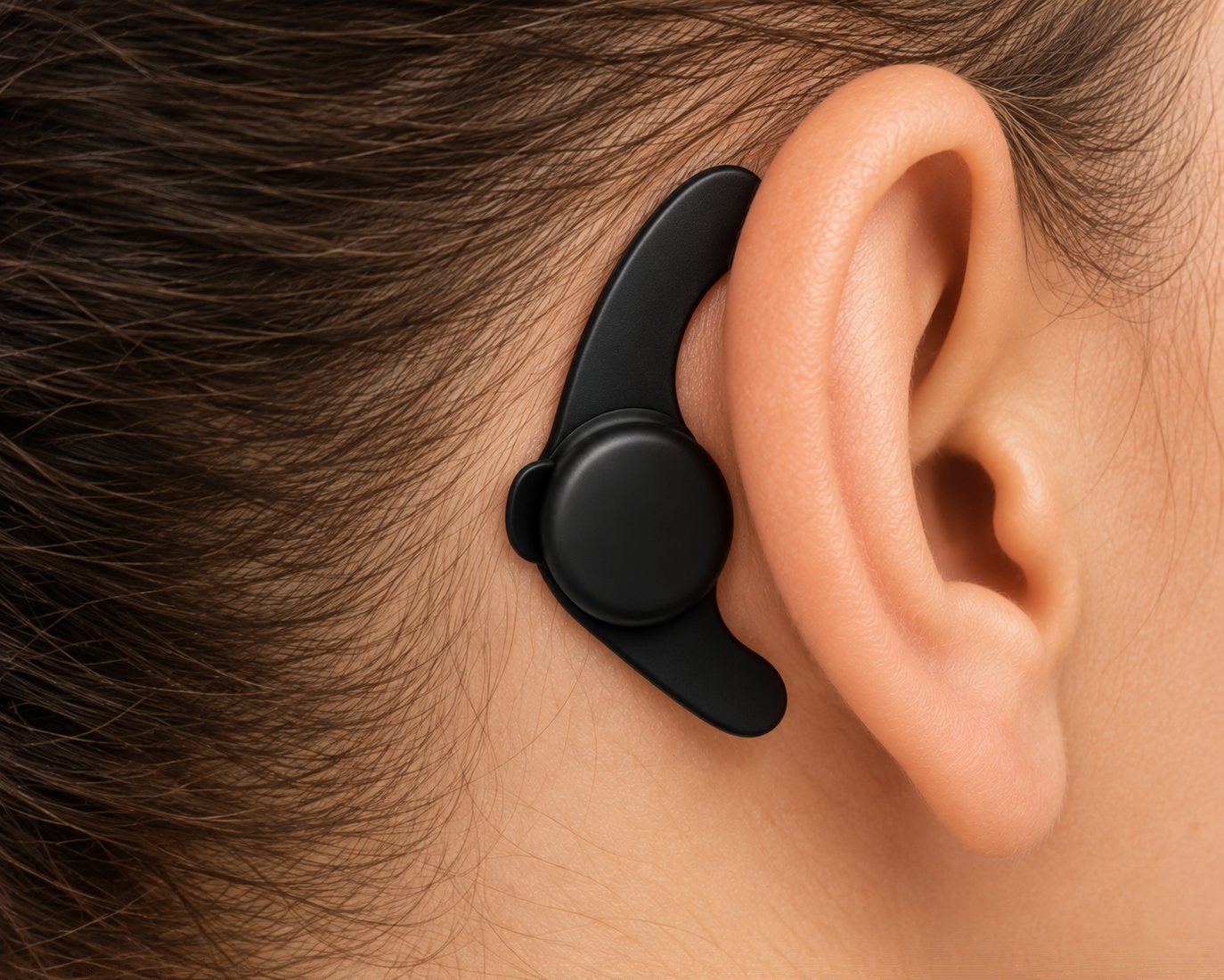
In development. Epile-X is not yet a medical device, has no regulatory approval and is not available for clinical use.
Seizures don't keep clinic hours.
Many happen at night, when no one is watching.
Some are never remembered, not even by the person who had them. Families stay half-awake, listening. Doctors make decisions from a diary.
We started Epile-X because people living with epilepsy deserve better information, and more independence, than that.
Behind every number, a daily reality.
Three people, one blind spot.
Mon morning · 2 min
Wed night · ?
Thu can't remember
Sat woke up confused…
Sun ?
Months of seizures. Minutes to recall.
At each appointment, patients are asked how many seizures they've had and how long they lasted. The main record is still a handwritten diary, which is unreliable when someone loses consciousness and has no memory of what happened.
Many go unrecorded.Seizures at night, or with loss of awareness, often never make it into the diary, and that affects diagnosis and treatment.
How can we give patients greater independence, families peace of mind, and doctors the information they need?
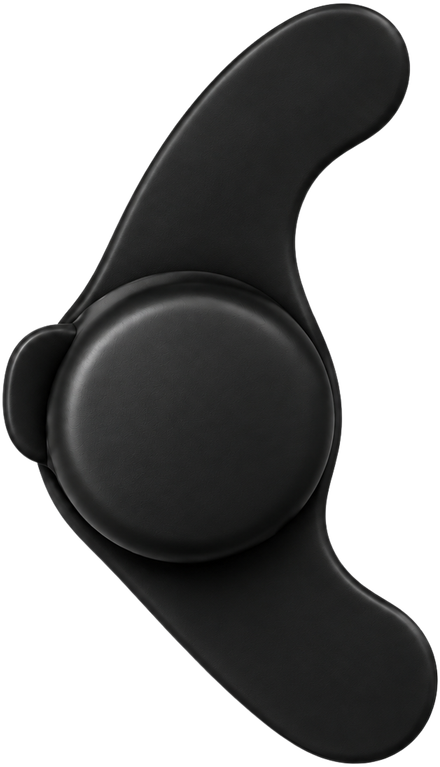
Designed to detect. Alert. Record.
Imagine having a seizure while you're alone. Epile-X is being designed to:
- Detect a likely seizure, using machine learning on brain and body signals.
- Alert someone you trust, through the companion app.
- Record the event automatically, for your doctor.
Design goals. Detection and alerts will only be offered after clinical validation and regulatory approval.
Many weak witnesses beat one strong one.
A seizure changes more than brain activity: the heart races, breathing and blood oxygen shift, the skin responds, the body moves. Epile-X records all of it in sync, behind the ear. Chewing, stairs or stress can fool any one sensor, but rarely all of them at once.
Hover or tap a sensor to see what it adds.
- EEGBrain activity
The core signal: electrical activity of the brain, from electrodes around each ear.
- MotionHead movement
Tells walking, turning and lying down apart, so movement artefacts can be flagged and removed from the EEG.
- SoundChewing, talking, breathing
Hears jaw activity, the biggest source of interference at the ear, plus breathing and snoring at night.
- HeartPPG: rate, HRV, SpO₂
Heart rate, heart-rate variability and blood oxygen from an optical sensor at the ear: the body’s side of arousal, stress and sleep.
- SkinConductance
Skin conductance rises with arousal and stress, a response the brain and heart share.
- TemperatureSkin and core estimate
Slow temperature rhythms across the day and night: body clock, sleep timing and fever context.
Illustrative. Epile-X is in development.
From two points to a fuller picture.
A hospital EEG cap uses around 20 electrodes. Behind-the-ear sensing has two sites, one on each side, so on its own it cannot match a full cap.
Our approach is to learn from the cap, then deploy on the ear. Volunteers wear a full research cap and Epile-X at the same time. Machine-learning models such as variational autoencoders learn how the two relate. They then reconstructvirtual scalp channels from the ear sensors and body signals, and estimate which side and region of the brain activity starts in, a little like triangulation.
Honest limits: two sites will never see everything a cap does, and deep or frontal sources stay hard to reach. Showing how far reconstruction can go is exactly what our studies are designed to measure.
Closer to the source
Wrist-based monitoring
Today's commercial seizure wearables sit on the wrist and read the body: heart rate, skin response and movement. They don't measure brain activity.
- Heart
- Skin
- Movement
Epile-X
Body signals plus direct brain activity, from behind the ear. Our aim: better accuracy and a wider range of seizure types, including the ones the wrist can't see.
- Heart
- Skin
- Movement
- Temperature
- Sound
- Brain (EEG)
Shaped with the epilepsy community
Built around everyday needs that patients and carers told us about.
- Caregiver alerts: let someone you trust know when you may need help.
- Seizure history: an objective record to share at appointments.
- Medication reminders and daily support.
App concept. Features are in design and not yet available.
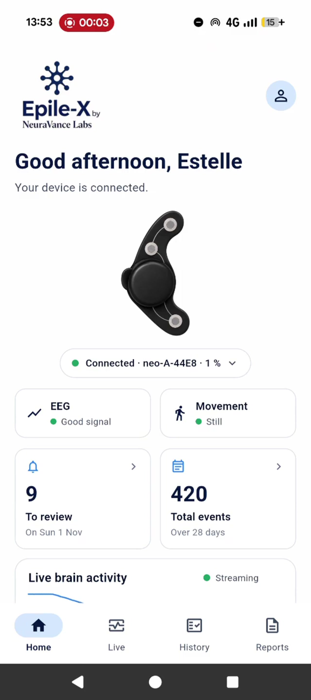
Already testing the foundations.
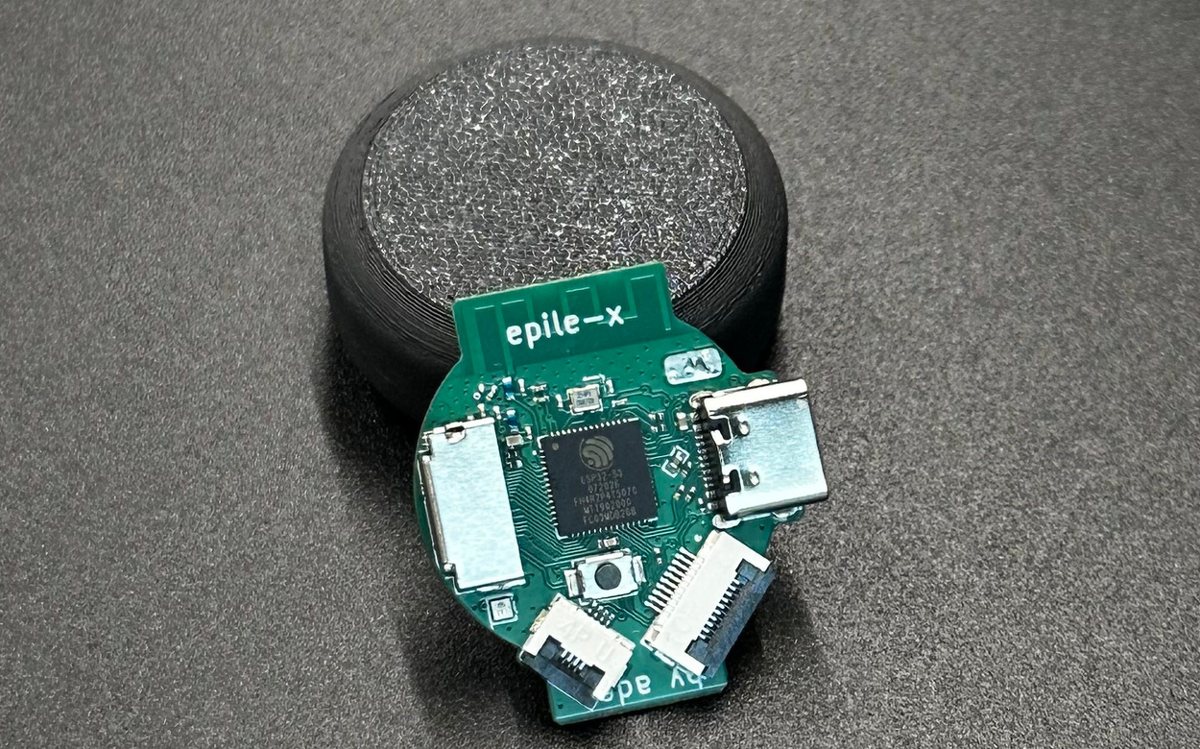
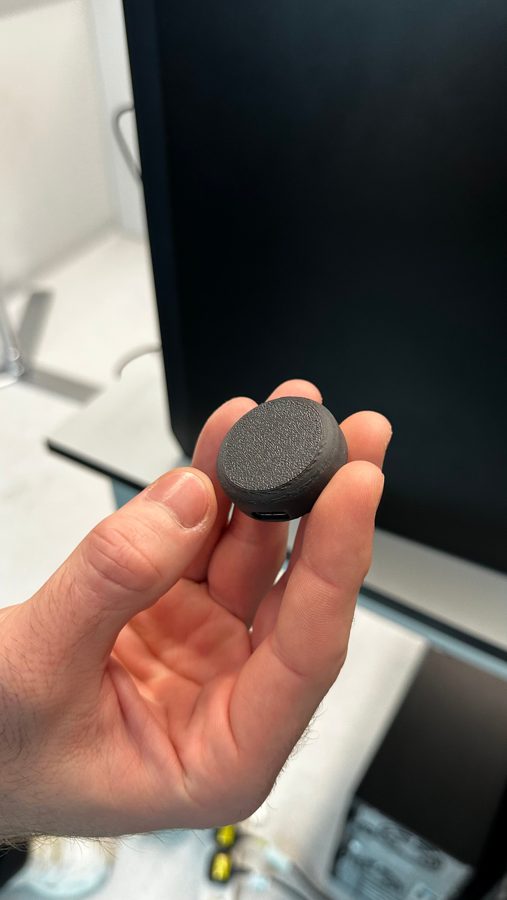
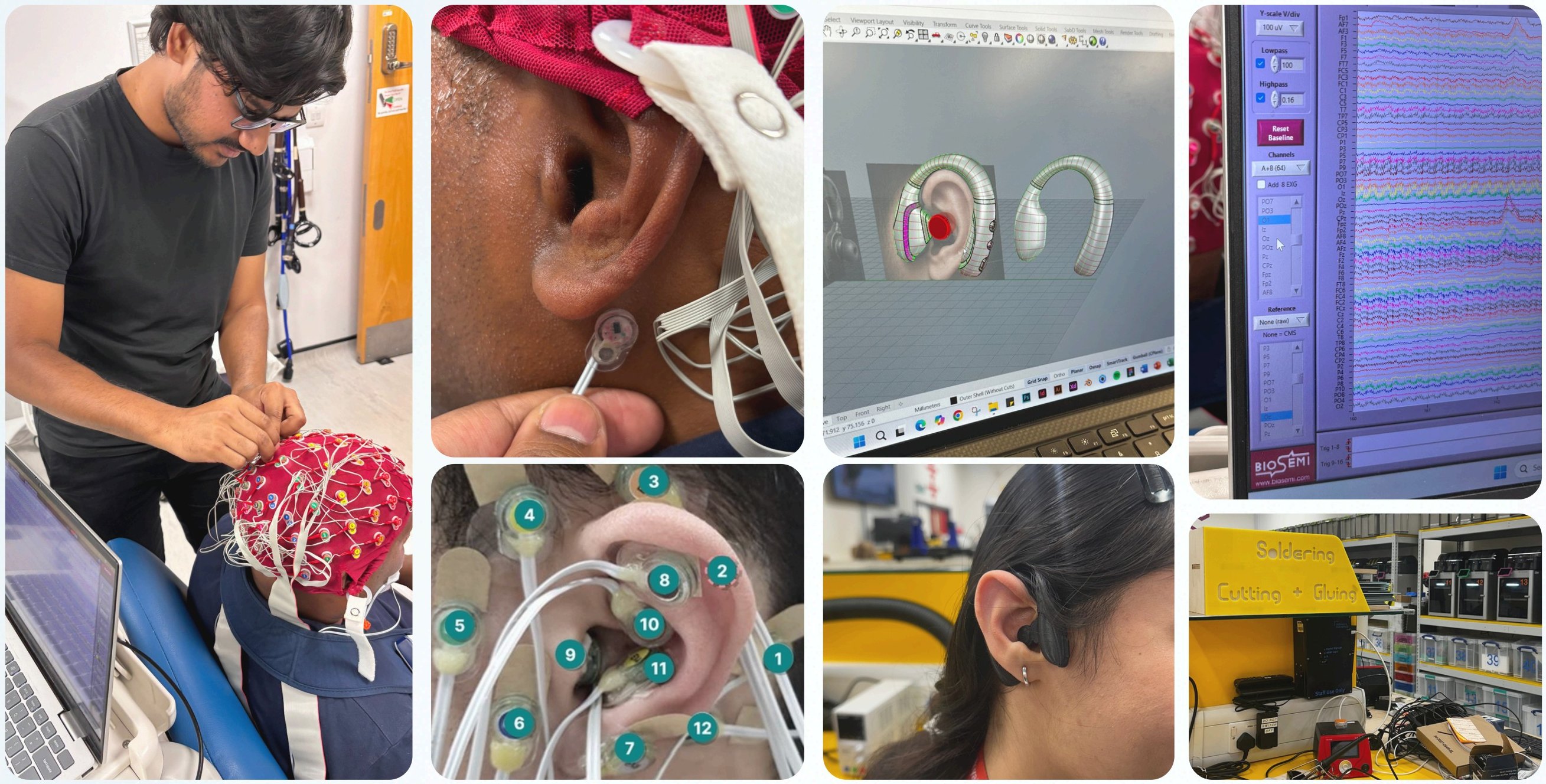
Our own electronics, firmware and enclosures. We have recorded brain activity from12 early volunteers in the lab, alongside research-grade reference EEG.
People want this. And want to help build it.

- National finalist, ESBF Champion of Champions 2026, Royal Academy of Engineering
- Venture Catalyst Challenge 2026
- Imperial WE Innovate
Can we reliably capture brain activity beyond the laboratory, in everyday life?
Next, we'll test Epile-X with eight participants from our volunteer list, measuring signal quality during everyday activities, including walking and sleeping. The outcome: measurable results, and a clearer path to clinical validation.
- DonePrototype built; brain activity recorded from 12 lab volunteers; 152 community conversations
- NextEveryday study: 8 participants, walking and sleeping
- 2027 – 2029Clinical validation, regulatory preparation, commercial partnerships
- 2029+Target UK launch, followed by Europe
A future where more seizures are recognised.
Where loved ones are informed, and doctors have better information to guide care. With your support, we can bring that future one step closer.
Volunteer
Interested in testing the prototype? Write to us and we'll explain how our studies work.
Email us